Quick answer: Bees are hairy, rounded and golden-brown, they feed on nectar and pollen, and they usually die after stinging. Wasps are smooth, shiny and slender with a narrow waist, they are more aggressive, and they can sting repeatedly. Getting the identification right matters, because bees are beneficial pollinators that should be relocated where practical, while pest wasps such as European wasps are usually treated.
People often use "bee" and "wasp" as if they mean the same insect, but they are quite different, and telling them apart changes how the situation should be handled. In Sydney, mistaking a honey bee swarm for a wasp nest can lead to a beneficial colony being killed unnecessarily, when it could have been safely relocated instead. Here is how to identify what you are looking at.
The quick visual test
If you can safely observe the insect from a distance, a few features usually give it away.
| Feature | Bees | Wasps |
|---|---|---|
| Body | Rounded, plump, hairy | Slender, smooth, shiny |
| Waist | Thick, not obviously pinched | Very narrow, distinctly pinched |
| Colour | Golden to amber brown, muted | Bright yellow and black, or metallic |
| Legs | Often carrying yellow pollen, tucked under | Long, thin, sometimes dangling in flight |
| In flight | Steady, purposeful, gentle hum | Faster, darting, more erratic |
As a rough guide, if the insect looks fuzzy and golden and seems busy rather than bothered, it is likely a bee. If it looks sleek, shiny and quick, with an obvious wasp-waist, you are probably looking at a wasp.
Behaviour tells you a lot
Honey bees are generally docile when foraging and only defend their hive if it is threatened. They are focused on flowers, not on your picnic. Wasps, particularly European wasps, are scavengers as well as hunters, so they are the ones hovering around your sausages on the barbecue, your soft drink can and the bin. That scavenging behaviour around food and drink is one of the clearest behavioural clues that you are dealing with a wasp rather than a bee.
A simple rule: bees are interested in your flowers, wasps are interested in your lunch. If an insect keeps returning to sweet drinks and meat at an outdoor meal, it is almost certainly a wasp.
The nest is often the clearest clue
Bee nests and swarms
Honey bees build nests from wax, forming neat vertical honeycomb. In a home this is usually hidden inside a wall cavity, chimney, roof void or hollow tree, often given away by a steady stream of bees coming and going from a single gap. A bee swarm looks different again: a large clustered ball of bees, often hanging from a branch, fence or eave, which is a colony temporarily resting while it looks for a permanent home. A resting swarm is usually calm and can often be collected by a beekeeper.
Wasp nests
Wasps build their nests from chewed wood pulp, which gives them a grey, papery appearance. Paper wasps make an open, umbrella-shaped nest with visible cells under eaves and pergolas. Mud daubers build small mud tubes on walls. European wasps build large enclosed nests, frequently hidden in wall cavities, roof voids, retaining walls or underground, with a single busy entrance.
Common Sydney species at a glance
- European honey bee — golden-brown, hairy, vital pollinator. Relocated where practical.
- Native stingless bees — small, dark, harmless, and protected. Best left alone entirely.
- Paper wasp — slender, reddish-brown to black, open umbrella nest. Native and useful, treated only when nests threaten high-traffic areas.
- Mud dauber — long, thin waist, builds mud tubes, very rarely stings.
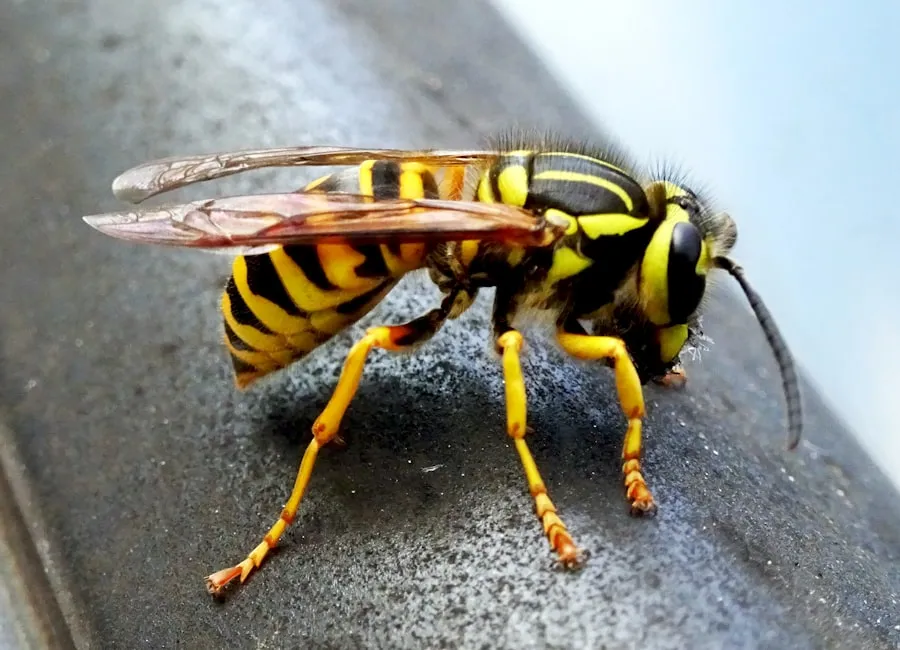
- European wasp — bright yellow and black, aggressive scavenger, introduced pest. Usually treated.
Why correct identification matters
This is not just an academic exercise. Bees are essential pollinators, and honey bee numbers face ongoing pressure from disease and habitat loss. Wherever it is practical, a honey bee colony or swarm should be relocated by a beekeeper rather than killed. Native stingless bees are harmless and should never be destroyed. Wasps, on the other hand, especially the introduced European wasp, are a genuine pest and safety risk, and treatment is usually the responsible course.
Because the right response is so different, we always identify the insect before recommending anything. If it turns out to be bees, we will talk you through relocation options first. If it is wasps, we will explain the safest treatment. Being honest about which one you have is central to how we work.
Safe wasp and bee removal
Licensed Sydney technicians, same-day service, and 20% off your first inspection — on-site within an hour of confirmation.
Get Your Free QuoteWhat to do while you decide
- Do not swat or spray. Whether bee or wasp, aggressive handling raises your chance of being stung and may kill beneficial bees needlessly.
- Keep your distance and observe. Note the body shape, colour, nest type and behaviour. A photo from a safe distance helps enormously.
- Protect anyone with an allergy. Keep allergic household members and pets away from the area entirely.
- Do not seal a nest entrance. Trapped bees or wasps will look for another way out, often into your living space.
- Get an expert opinion. If you are unsure, send us a photo and we will identify it and recommend the responsible option.
A word on stings and allergies
Both bees and wasps can trigger severe allergic reactions in sensitive people. A bee typically leaves its barbed sting in the skin, so scrape it out sideways rather than pinching, which can squeeze in more venom. For most people a sting means local pain and swelling that settles in a day or two. But if you notice difficulty breathing, swelling of the face, lips or throat, chest tightness, dizziness or a spreading rash, treat it as an emergency, call 000 immediately, and use an adrenaline auto-injector if one is available.
Not sure whether you have bees or wasps? Send us a photo and we will help you identify it. Learn about our wasp & bee removal service, request a free quote, or contact us on 0468 070 392.
Frequently Asked Questions
How can I tell a bee from a wasp at a glance?
Look at the body. Bees are hairy, rounded and golden-brown, while wasps are smooth, shiny and slender with a sharply pinched waist. Behaviour helps too: bees visit flowers, wasps scavenge around food and drink.
Do bees or wasps sting more than once?
Honey bees usually die after stinging because their barbed sting stays in the skin, so they sting once. Wasps have a smooth sting and can sting repeatedly, which is part of why an aggressive wasp nest is more hazardous.
Should bees always be relocated instead of killed?
Wherever it is practical, yes. Honey bees are valuable pollinators and a swarm or accessible colony can often be relocated by a beekeeper. Native stingless bees are harmless and protected and should be left alone. Relocation is not always possible for colonies deep inside a wall, and we will give you an honest assessment.
Are paper wasps as dangerous as European wasps?
Generally no. Native paper wasps are less aggressive and do useful pest control in the garden, so a nest away from doorways is often best left alone. European wasps are an introduced pest, far more aggressive, and sting repeatedly, so they are usually treated.
I found a large cluster of insects hanging from a branch. What is it?
A large clustered ball of insects hanging from a branch or fence is most likely a honey bee swarm, a colony resting while it seeks a new home. Swarms are usually calm, should not be sprayed, and can often be collected by a beekeeper. Keep clear and call for advice.