Quick answer: The ants in most Sydney homes fall into a handful of species — coastal brown ants, black house ants, Argentine ants, odorous house ants and the occasional bull ant from the garden. Identifying which one you have matters because sugar-feeders, protein-feeders and super-colony builders each need a different treatment. Size, colour and where they nest are the quickest ways to tell them apart.
People often assume "an ant is an ant". In practice, the species drives everything about how we treat an infestation — the bait we choose, where we place it, and how long control takes. Here is a practical field guide to the ants you are most likely to meet in a Sydney home or garden.
How to identify an ant quickly
You do not need a microscope. Three features get you most of the way:
- Size — measure against something familiar. Under 2mm is tiny, 3mm is medium, over 5mm is large.
- Colour and sheen — pale honey-brown, glossy black, or dull brown.
- Where they nest and forage — kitchen benches, wall cavities, pavers, garden beds or lawns.
If you can photograph a few ants next to a five-cent coin, that is usually enough for our technicians to identify the species. Below are the locals.
Coastal brown ant (big-headed ant)
Arguably the most common nuisance ant across Sydney's coastal and eastern suburbs. Coastal brown ants are tiny — around 1.5 to 2.5mm — and a pale yellow-brown. The workers come in two sizes, and the larger "major" workers have a noticeably oversized head, which gives the species its other name.
You will recognise them by the small piles of excavated soil they push up between pavers, along path edges and beside garden retaining walls. They nest in the ground, under slabs and beneath pathways, and readily move indoors chasing food. They are strong sweet-feeders but also take protein and oils.
If you see fine soil "spoil heaps" appearing overnight between your pavers on the northern beaches or in the east, coastal brown ants are almost always the culprit.
Black house ant
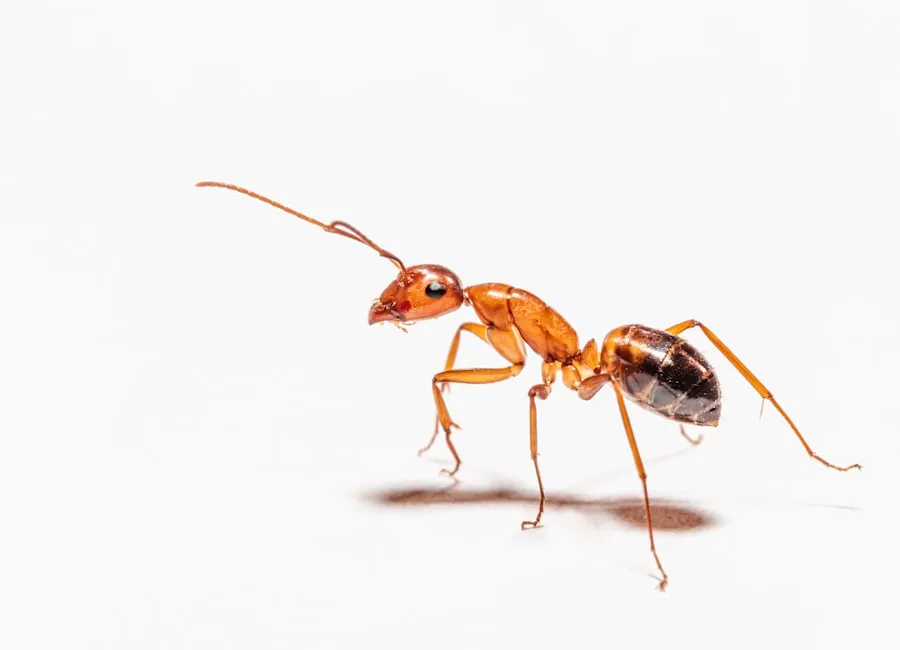
The classic kitchen ant. Black house ants are shiny black, slender, and about 2.5 to 3mm long. They form well-defined foraging trails and are relentless about sweet foods — spilled cordial, honey, fruit and pet biscuits are all fair game.
They nest outdoors in soil, under logs, in wall cavities and roof voids, then send trails indoors through the smallest gaps around windows and skirting. They are not a health threat in the way cockroaches are, but they can contaminate food and are simply unpleasant in numbers.
Argentine ant
Argentine ants are light to medium brown, roughly 1.5 to 3mm, and move in busy, wide trails many ants deep. Their defining trait is cooperation — instead of separate colonies fighting each other, Argentine ants form vast interconnected super-colonies with many queens. This makes them one of the hardest ants to control, because knocking out one nest barely dents the population.
They are common in warmer inland Sydney suburbs and can displace native ants entirely. If you have enormous numbers, multiple trails, and treatments that never seem to finish the job, Argentine ants are a strong suspect and a good reason to bring in professional ant control.
Odorous house ant
Small, dark brown to black, and around 2 to 3mm. The giveaway is in the name — crush one and you get a distinct smell often described as rotten coconut. They favour sweets and are drawn indoors by moisture, so they turn up around kitchens and bathrooms, especially after rain.
Bull ants and jumper ants
These are the big ones — 8 to 20mm — with large eyes and powerful jaws. Bull ants and their smaller cousins, jumper ants, nest in the ground in gardens and bushland-fringe suburbs across Sydney. They are aggressive when disturbed and deliver a genuinely painful sting that can cause a serious allergic reaction in sensitive people.
Unlike kitchen ants, bull ants are usually an outdoor problem near their nest rather than an indoor invasion. If a nest is close to a play area or path, it is worth treating directly.
Why species changes the treatment
Here is a quick reference for how identification shapes control:
| Species | Size | Typical nest | Main food |
|---|---|---|---|
| Coastal brown ant | 1.5–2.5mm | Soil, under pavers/slabs | Sweet, protein, oils |
| Black house ant | 2.5–3mm | Soil, wall/roof voids | Sweet |
| Argentine ant | 1.5–3mm | Super-colonies, many nests | Sweet |
| Odorous house ant | 2–3mm | Near moisture | Sweet |
| Bull ant | 8–20mm | Ground nest, gardens | Insects, nectar |
A sweet bait that black house ants devour may be ignored by a protein-hungry colony raising brood. Argentine ant super-colonies need a coordinated, sustained baiting approach rather than spot treatments. And a bull ant nest calls for direct nest treatment, not bench-top bait. Correct identification is the difference between a lasting result and endless re-treatment.
Destroy the whole ant colony
Licensed Sydney technicians, same-day service, and 20% off your first inspection — on-site within an hour of confirmation.
Get Your Free QuoteNot sure what you have?
Identification is genuinely tricky with tiny species, and getting it wrong wastes weeks of baiting. Send us a clear photo through our contact us page, or book a free quote and a licensed technician will identify the species on site and match the treatment to it.
Frequently Asked Questions
What are the tiny light-brown ants pushing soil up between my pavers?
Almost certainly coastal brown ants, one of the most common nuisance species in Sydney's eastern and coastal suburbs. The little soil piles are excavated from their underground nests.
How can I tell black house ants from Argentine ants?
Black house ants are glossy black and travel in neat single-file trails. Argentine ants are brown and move in wide, dense trails many ants across. Argentine ants also form huge cooperative super-colonies, so numbers are usually much higher.
Are any Sydney house ants dangerous?
Common kitchen ants are a nuisance and can contaminate food but are not dangerous. Bull ants and jumper ants are the exception — their sting is painful and can cause a serious allergic reaction in sensitive people.
Do I really need to know the species?
For lasting control, yes. Sugar-feeders, protein-feeders and super-colony species need different baits and placement. Treating the wrong way often just splits the colony or wastes weeks.
Why do the ants change what they eat?
Many species switch between sweet and protein foods depending on what the colony needs — protein when raising brood, carbohydrates for energy. If a bait is suddenly ignored, the colony's preference has shifted and you should switch bait type.