Quick answer: European wasps are an aggressive introduced pest that, unlike bees, can sting repeatedly and will defend their nest fiercely. Their nests are often hidden in wall cavities, roof voids, retaining walls or underground and can grow very large. They are a genuine safety risk, particularly for anyone with a sting allergy, and their nests should always be treated by a licensed technician rather than tackled at home.
Of all the stinging insects we deal with around Sydney, the European wasp is the one we most want people to take seriously. It is not native, it has no place in the local balance the way paper wasps do, and its behaviour makes it far more hazardous than the wasps most Sydneysiders grew up with. If you think you have European wasps, this guide explains why they matter and what to do.
How to identify a European wasp
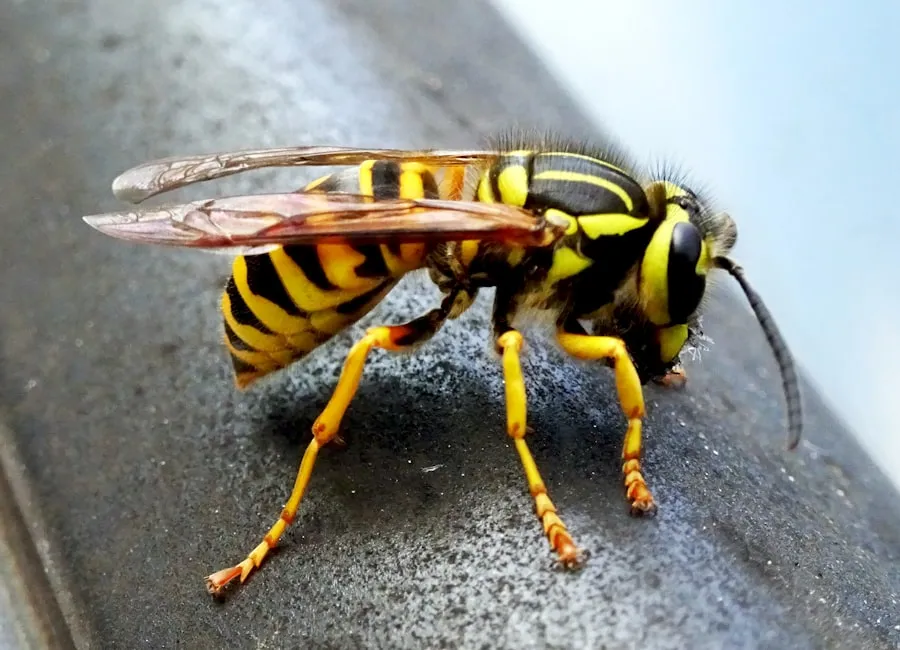
European wasps (Vespula germanica) are roughly the size of a honey bee but look completely different. Key features include:
- Bright yellow and black banded body, with a distinct pattern of black spots and triangles on the abdomen.
- Smooth, shiny, largely hairless body, unlike the fuzzy golden honey bee.
- Yellow legs, often held close to the body in flight rather than dangling.
- Short, black antennae.
They are easily confused with bees at a glance, but the bright, clean yellow-and-black colouring and smooth body are the giveaways. If you see numbers of these streaming in and out of a single point in a wall, the ground or a roofline, treat it as a European wasp nest and keep well clear.
Why they are more dangerous than most wasps
They sting repeatedly
A honey bee stings once and dies because its barbed sting stays in the skin. A European wasp has a smooth sting and can sting again and again, so a single defensive wasp can inflict multiple stings, and a disturbed nest can produce dozens in seconds.
They are aggressive and defend the nest fiercely
European wasps become highly defensive when their nest is threatened, and they can release an alarm signal that rallies the colony to attack. Simply mowing over a hidden ground nest or disturbing a wall cavity can trigger a mass response.
Their nests are large and often hidden
Unlike the small, open umbrella nests of paper wasps, European wasp nests are enclosed and can become very large, sometimes containing thousands of wasps. Because they are commonly tucked inside wall cavities, roof voids, retaining walls, compost heaps or underground, people often do not realise how big the colony is until it is well established. In Sydney's mild conditions, some nests can even survive winter and grow into the following season.
They scavenge around people and food
European wasps are strongly attracted to food and sweet drinks, so they turn up at barbecues, picnics, outdoor cafes, bins and pet bowls. This scavenging habit brings them into close, repeated contact with people, which increases the chance of stings, including the notorious risk of a wasp crawling into an open drink can and stinging inside the mouth or throat.
The combination of repeated stings, aggressive nest defence, large hidden colonies and constant scavenging around people is what makes the European wasp the most concerning stinging insect we deal with in Sydney.
The health risk: allergy and anaphylaxis
For most people, a European wasp sting causes intense, immediate pain, redness and swelling that settles over a day or two. But because these wasps can deliver multiple stings, the venom load can be significant, and multiple stings can make even non-allergic people unwell.
The serious danger is allergic reaction. In sensitive individuals, a single sting can trigger anaphylaxis, a rapid and potentially fatal reaction. Warning signs include difficulty breathing or wheezing, swelling of the face, lips, tongue or throat, tightness in the chest, a rapid or weak pulse, dizziness, fainting, nausea, or a widespread rash or hives. If any of these appear after a sting, call 000 immediately and use an adrenaline auto-injector such as an EpiPen straight away if one is available. Do not wait to see if symptoms pass. Anyone who has been stung inside the mouth or throat, or stung many times, should also seek urgent medical attention because of the risk of swelling and airway obstruction.
Safe wasp and bee removal
Licensed Sydney technicians, same-day service, and 20% off your first inspection — on-site within an hour of confirmation.
Get Your Free QuoteWhat to do if you find a European wasp nest
- Keep away from it. Do not approach, disturb, or try to seal the entrance. Keep children, pets and anyone with an allergy well clear.
- Watch from a safe distance. Note where the wasps enter and exit so a technician can locate the nest, which is often not where you would expect inside a cavity.
- Do not spray or dig it out. Household sprays usually just enrage the colony, and disturbing a large nest is genuinely dangerous.
- Avoid the flight path. Keep outdoor activity away from the line the wasps travel to and from the nest.
- Call a licensed technician. European wasp nests need proper protective equipment and dusting treatment applied at the entrance so returning wasps carry it back into the colony. This is not a DIY job.
Why professional treatment is the safe choice
Treating a European wasp nest safely means getting insecticidal product deep into a large, defended, often concealed colony without provoking a mass sting event. Licensed technicians use protective gear, extension equipment and the right products to treat the nest from a safe position, then allow the colony to collapse over the following day or two as foragers spread the treatment inside. Attempting this yourself, particularly at height or with a hidden cavity nest, risks serious multiple stings for very little chance of actually resolving the problem.
Reducing European wasps around your Sydney home
- Keep outdoor bins tightly closed and clean up food scraps and spills promptly.
- Pick up fallen fruit under trees, which is a strong attractant.
- Never drink from open cans or bottles outdoors in summer; use a clear glass or a lid so you can see if a wasp has entered.
- Cover pet food and clear away bowls after feeding outside.
- Seal gaps around rooflines, weep holes and vents to discourage nesting in cavities.
- Report and treat nests early in the season, while they are still small.
If you suspect European wasps on your property, do not take chances. Get a free quote, read about our wasp & bee removal service, or contact us on 0468 070 392 and we will respond promptly.
Frequently Asked Questions
How do I know if I have European wasps and not bees?
European wasps are bright, clean yellow and black with a smooth, shiny, hairless body and yellow legs, whereas honey bees are fuzzy and golden-brown. Wasps also scavenge around food, drinks and bins, while bees visit flowers. If in doubt, send us a photo and keep clear of the nest.
Can European wasps sting more than once?
Yes. Unlike honey bees, which sting once and die, European wasps have a smooth sting and can sting repeatedly. A disturbed nest can deliver many stings very quickly, which is a major reason they are so dangerous.
Why can't I just spray the nest myself?
European wasp nests are often large and hidden inside cavities, and household sprays tend to agitate rather than eliminate the colony while putting you in range of a mass sting response. Licensed technicians use protective equipment and dusting treatment applied safely at the entrance, which is far more effective and much safer.
Are European wasp nests active in winter in Sydney?
Most colonies decline over winter, but Sydney's mild climate means some nests can survive and continue growing into a second season, becoming very large. This is one reason it is best to treat a nest promptly rather than wait for it to die off.
What should I do if someone is stung and reacts badly?
Call 000 immediately if you see difficulty breathing, swelling of the face, lips, tongue or throat, chest tightness, dizziness, fainting or a spreading rash, as these are signs of anaphylaxis. Use an adrenaline auto-injector such as an EpiPen straight away if one is available. Stings inside the mouth or throat and multiple stings also need urgent medical attention.