Quick answer: If you find a wasp nest around your Sydney home, keep your distance, keep children and pets away, and do not spray it, hit it, or block the entrance. Small, freshly built nests can sometimes be managed carefully, but active or large nests, and anything belonging to European wasps, should be handled by a licensed technician who has the right protective gear and treatment.
Wasp nests seem to appear overnight. One weekend the eaves are clear, and the next there is a papery grey nest the size of a fist, humming with activity every time you open the back door. In Sydney we deal with these calls constantly through the warmer months, from late spring through to autumn. This guide walks you through exactly what to do, what to avoid, and how to tell when a nest has moved beyond a DIY job.
First, work out what you are dealing with
Not every nest is the same, and the safest response depends on the species. Around Sydney homes we most often see three types.
Paper wasps
These build the classic open, upside-down umbrella nest with visible hexagonal cells, usually under eaves, pergolas, in dense shrubs, or under outdoor furniture. Paper wasps are native, generally not aggressive unless the nest is disturbed, and they do useful work eating caterpillars and other garden pests. A small paper wasp nest well away from doorways is often best left alone.
Mud daubers (mud wasps)
Mud daubers build hard, tube-shaped mud nests on walls, under eaves and in sheds. They are solitary, rarely sting, and are among the least dangerous wasps you will encounter. Their old nests can simply be scraped off once vacant.
European wasps
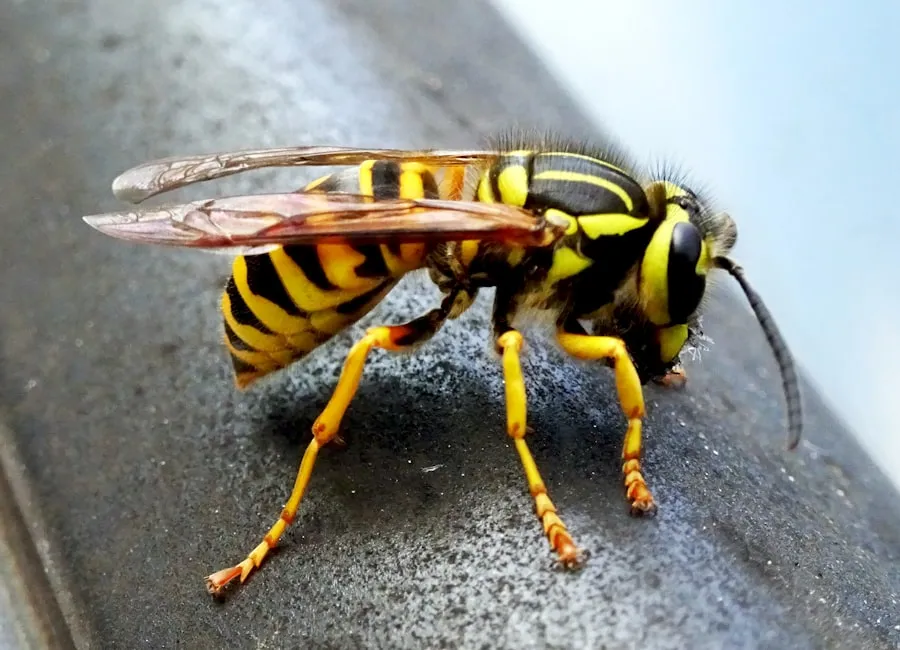
This is the one to take seriously. European wasps are an introduced pest, they are aggressive, and they can sting repeatedly. Their nests are often hidden in wall cavities, roof voids, retaining walls or underground, with wasps streaming in and out of a single entry point. If you suspect European wasps, do not approach the nest. See our separate guide on why European wasps are dangerous.
What to do
- Keep your distance. Observe from several metres away. Watch where the wasps enter and exit so a technician can locate the nest quickly.
- Restrict access to the area. Keep children, pets and anyone with a known allergy well clear. Close nearby windows and doors if wasps are drifting inside.
- Note the location. Nests in wall cavities and roof voids are far harder to treat than an exposed nest under an eave. A quick photo from a safe distance helps us come prepared.
- Avoid the flight path. Wasps follow fairly consistent routes to and from the nest. Keep outdoor dining, washing lines and play areas away from that line until it is dealt with.
- Call a licensed technician for anything active or large. If the nest is near a doorway, high traffic area, or is a European wasp nest, professional treatment is the safe choice.
What to never do
The most common wasp injuries we hear about in Sydney come from people trying to remove a nest themselves in the heat of the moment, usually with a can of spray or a broom. A disturbed nest can turn defensive in seconds.
- Do not hit or knock the nest. Physical disturbance triggers a mass defensive response. Dozens of wasps can be on you before you reach the door.
- Do not spray it with household aerosols. Off-the-shelf sprays often only agitate the colony, and standing directly beneath a nest to spray it puts you right in the danger zone.
- Do not block the entrance. Sealing a wall-cavity nest forces wasps to find another way out, often into your living space through gaps and light fittings.
- Do not use fire, petrol or boiling water. These are dangerous, ineffective, and a genuine fire risk around eaves and roof timbers.
- Do not tackle a nest at night without training. While wasps are less active after dark, working at height on a ladder in low light introduces its own serious hazards.
- Do not attempt removal if you or anyone nearby has a sting allergy. The risk is simply not worth it.
Know the signs of a serious sting reaction
Most wasp stings cause sharp pain, redness and swelling that settles within a day or two. A cold pack and an antihistamine usually manage the discomfort. However, a small number of people react severely, and this can be life threatening.
Call Triple Zero (000) immediately if you or someone else shows any signs of anaphylaxis after a sting, including difficulty breathing, swelling of the face, lips or throat, tightness in the chest, dizziness or fainting, or a widespread rash. If an adrenaline auto-injector (such as an EpiPen) is available, use it straight away. People who have been stung many times at once should also seek medical advice, even without an allergy, because the venom load can be significant.
Safe wasp and bee removal
Licensed Sydney technicians, same-day service, and 20% off your first inspection — on-site within an hour of confirmation.
Get Your Free QuoteWhen to call a professional
As a rule of thumb, call a licensed technician if any of the following apply:
| Situation | Why it matters |
|---|---|
| Nest in a wall cavity, roof void or underground | Hidden nests need proper access and dusting equipment, not surface spray |
| Suspected European wasps | Aggressive, sting repeatedly, and nests are often large |
| Nest near a door, window or high-traffic area | High chance of accidental disturbance and stings |
| Anyone in the household has a sting allergy | A defensive swarm poses a serious medical risk |
| Nest is out of easy, safe reach | Ladder work at height adds a fall risk on top of the sting risk |
A professional treatment usually involves applying an insecticidal dust directly at the nest entrance using extension equipment, so the technician stays out of the immediate danger zone. Returning foragers carry the product back into the nest, and the colony typically dies down over the following day or two.
Preventing wasps around your Sydney home
- Check eaves, pergolas and sheds in early spring when nests are small and easier to deal with.
- Keep outdoor bins closed and clean up fallen fruit, which draws European wasps in particular.
- Cover pet food and drinks when eating outside during summer.
- Seal gaps around rooflines, weep holes and vents where wasps can enter cavities.
If you are unsure what you are looking at, or the nest is anywhere near your home's entry points, it is always worth a quick chat. Our team offers honest advice, and we will tell you plainly if a nest is safe to leave alone. Book a free quote, learn more about our wasp & bee removal service, or contact us on 0468 070 392.
Frequently Asked Questions
Can I remove a small wasp nest myself?
A very small, newly built paper wasp nest in an isolated spot can sometimes be managed carefully, but only if no one nearby has a sting allergy and the nest is at safe, easy reach. Anything active, large, hidden in a cavity, or belonging to European wasps should be left to a licensed technician.
Will a wasp nest go away on its own?
Most paper wasp and European wasp colonies die off naturally over winter, and the nest is not usually reused. However, waiting out an active nest near your home through summer is rarely practical or safe, and European wasp nests can grow very large if left.
How quickly can you treat a nest in Sydney?
We offer same-day service across Sydney and can often be on-site within an hour of confirmation. Treatment itself is usually quick, though we may recommend keeping clear of the area for a short period afterwards.
Is it safe to remove the nest straight after treatment?
Not immediately. Returning foragers keep arriving for a day or two after treatment, so we advise leaving the nest in place until activity stops. Your technician will let you know when it is safe to remove or when it can simply be left to break down.
What should I do if I get stung?
For a normal sting, apply a cold pack and take an antihistamine if needed. If you notice trouble breathing, facial or throat swelling, dizziness or a spreading rash, call 000 immediately and use an adrenaline auto-injector if one is available, as these are signs of a serious allergic reaction.