Quick answer: Ant sprays make the problem worse because they only kill the visible foragers — about five per cent of the colony — while leaving the queen and brood untouched. Worse, the repellent chemicals stress many common Sydney species into "budding", where a single colony splits into several new nests. You end up with more trails, in more places, than you started with. Slow-acting baits that ants carry back to the queen are the answer.
It's the most natural instinct in the world. You see a trail of ants on the bench, you grab the can from under the sink, and you spray. The ants drop, the trail disappears, and it feels like a win. Then a week later they're back — and sometimes there are two trails instead of one. Here's what's actually happening.
You're only killing the couriers
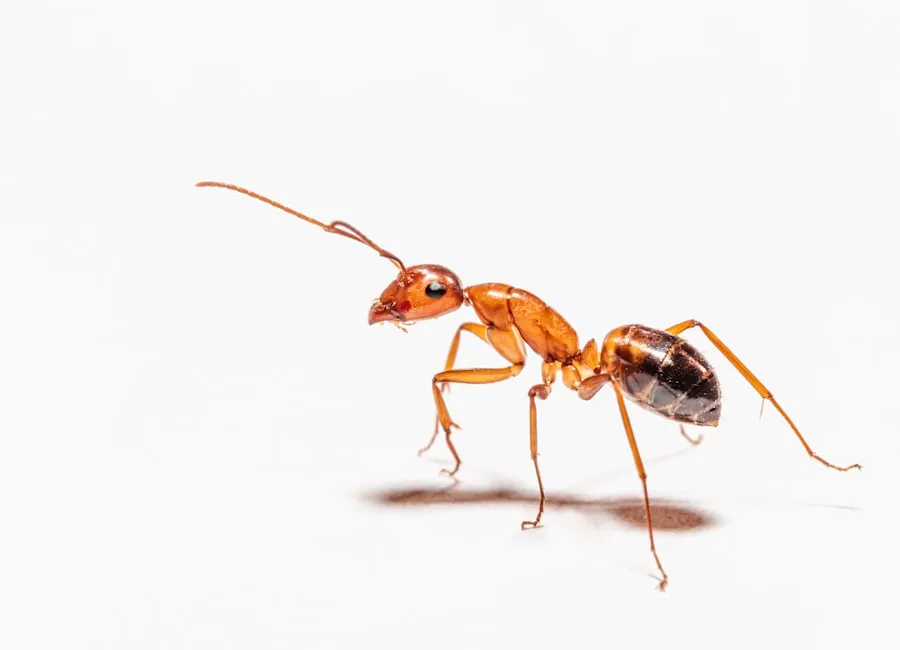
The ants you see marching across your kitchen are foragers. They are the delivery drivers of the colony, and they make up only a small fraction of the total population. The queen, the eggs, the larvae and the vast majority of workers never leave the nest — which might be under your pavers, in a wall cavity, beneath the slab or out in the garden.
When you spray a trail, you kill the couriers and nothing else. The queen keeps laying eggs, the colony keeps producing new foragers, and within days a fresh trail appears. You haven't touched the source; you've just interrupted the delivery run.
Spraying the trail is like arresting a courier and expecting the warehouse to shut down. The queen is the warehouse, and she never comes to the kitchen.
Repellent sprays can split the colony
This is the part most people don't know, and it's the real reason spraying backfires. Most retail ant sprays are repellent — they're designed to create a barrier ants won't cross. But many ant species common in Sydney, including coastal brown ants and Argentine ants, respond to that chemical stress by budding: the colony fractures, and one or more queens leave with a group of workers to establish new satellite nests elsewhere.
So the spray that was meant to solve your problem has just multiplied it. One nest becomes two or three, often spread further around the house and harder to find. This is why we regularly get calls from homeowners who say "I've been spraying for weeks and it keeps getting worse" — the spraying is the cause.
Sprays create invisible gaps ants walk around
Because ants can detect and avoid repellent residues, a sprayed barrier rarely seals anything. The ants simply detour around it, finding new entry points you haven't treated. You think you've built a wall; the ants see a road closure and take the next street. Meanwhile the treated surfaces — often kitchen benches and skirting — now carry insecticide residue where your family lives and eats.
Why baiting works when spraying fails
Baiting flips the whole strategy. Instead of killing foragers on contact, a bait uses them as unwitting delivery agents against their own colony:
- The bait pairs a food ants actively want with a slow-acting active ingredient.
- Because it's slow, foragers survive long enough to carry it back to the nest.
- Inside the nest, food is shared mouth-to-mouth (a process called trophallaxis), spreading the active ingredient to workers, brood and — crucially — the queen.
- With the queen gone, the colony can't replace its losses, and it collapses.
The trade-off is patience. Baiting looks slower because you keep seeing ants for a week or two — but those ants are ferrying the treatment home. It's the difference between treating the symptom and treating the source.
What to do instead of spraying
- Put the spray down. Especially don't spray near bait — repellent will drive ants away from the very thing you need them to eat.
- Wipe the trail with hot soapy water. This erases the pheromone path without repelling ants from a bait nearby.
- Place a slow-acting bait beside the trail. Match it to the season — sweet baits often work in the warmer months, protein baits when the colony is raising brood.
- Remove food and moisture. Seal sweets, fix leaks, clean under appliances.
- Be patient and don't disturb the bait stations. Let the colony do the work of poisoning itself.
Destroy the whole ant colony
Licensed Sydney technicians, same-day service, and 20% off your first inspection — on-site within an hour of confirmation.
Get Your Free QuoteWhen to bring in a professional
If you've already been spraying for a while and the problem has spread, the colony may have budded into several nests that are now difficult to trace. That's a common point at which DIY stops being efficient. A licensed technician uses professional, non-repellent products that transfer through the colony far more effectively than anything on a supermarket shelf, and knows how to read the trails back to multiple nest sites.
Our ant control technicians can undo the damage that months of spraying often cause and target the actual source. Book a free quote or contact us on 0468 070 392 for honest advice on what your situation needs.
Frequently Asked Questions
Why do ants come back worse after I spray them?
Because you only kill the visible foragers while the queen keeps breeding, and repellent sprays can stress some Sydney species into splitting the colony into new nests. The result is more trails in more places.
What does "colony budding" mean?
Budding is when a stressed colony fractures and one or more queens leave with a group of workers to start satellite nests. Repellent sprays are a common trigger, which is how spraying turns one nest into several.
Is it ever okay to use ant spray?
Direct nest treatment can have a place, but spraying visible trails on benches and skirting is counterproductive and contaminates food surfaces. For colony control, baiting is far more effective and safer indoors.
Why do I need to stop spraying before baiting works?
Repellent residue drives ants away from the bait you want them to eat. If you spray near a bait station, foragers avoid it and never carry the treatment back to the queen, so the baiting fails.
The ants ignore the bait I put down — why?
Usually the bait type doesn't match what the colony wants right now, or there's repellent residue nearby, or a better food source is competing. Switch between sweet and protein bait, remove other food, and keep spray well away.